Kratom's Antipsychotic Effects: How and Why It Works to Treat Psychosis Naturally
 If you’re new to the literature that Lydi and I have written about natural treatments for psychosis and the role of trauma is psychosis, we’ll have to set the context here a bit in order to talk about kratom as a natural anti-psychotic medicine.
If you aren’t an expert on trauma, what it is and how to treat it, be sure to follow the links to better understand the content of this section about kratom. In conventional medicine / psychiatry and psychology, psychosis is not curable, but if you or a loved one has recently been diagnosed with schizophrenia, or any number of other psychiatric illnesses that involve psychosis and a potentially hopeless trajectory, you need to find a new model to work with in order to find hope for a cure. A key concept, in this case, is trauma.

Click here to schedule a health coaching session with us.
The Egyptian sphinx, a humanoid-cat-like-animal is a good metaphor that can be helpful in understanding trauma and the human experience. The sphinx is the embodiment of man and animal. The man is a logical, domesticated creature that can put words to his experience so that other men can share it. The animal may understand words, but it doesn’t always have the ability to produce them and it acts on the basis of instinct and intuition. In order to cure schizophrenia or any other psychosis, we have to understand that the animal part of our nature can only take so much stress and trauma before it begins to be problematic.The animal part of our nature is like a fully developed human that’s between the ages of 2 and 4 years of age. This animal part of our nature does not have a lot of words. It doesn’t know how to spell things. It does know how it feels though. An actual 2-4 year old child is fully aware of how it feels about situations, people, food, and other things that he or she is exposed to. Some children are punished for acting out their feelings and those kids learn early to not show their feelings or act on them. Over time, those kids even learn how not to feel their feelings.
Click here to buy Kratom.
Other kids are encouraged to express their emotions and act on them, within certain socially permissible boundaries. These kids might also be given words to describe (to themselves) how they feel so as to be able to express their feelings without always having to act them out.Parents in today’s world may teach their kids whether to lead with the animal side or with the human, logical side of their nature. At this time in history, modern humans place a lot of weight and value on logic as opposed to intuition and feeling. But logic is made up of rules and many of them are contradictory from one situation or institution to the next. The church has one set of rules while the soccer club has an entirely different set. In order to adhere to the rules at the church and then go directly to the soccer club afterward, children learn to dissociate into separate sub-personalities to manage the conflict in terms of the rules in one institution in contrast to the rules in another.
This ability to dissociate can be valuable if it is used Intentionally and with care, but in most cases in today’s world, dissociation happens unintentionally and it is a foundation upon which mental illness develops.
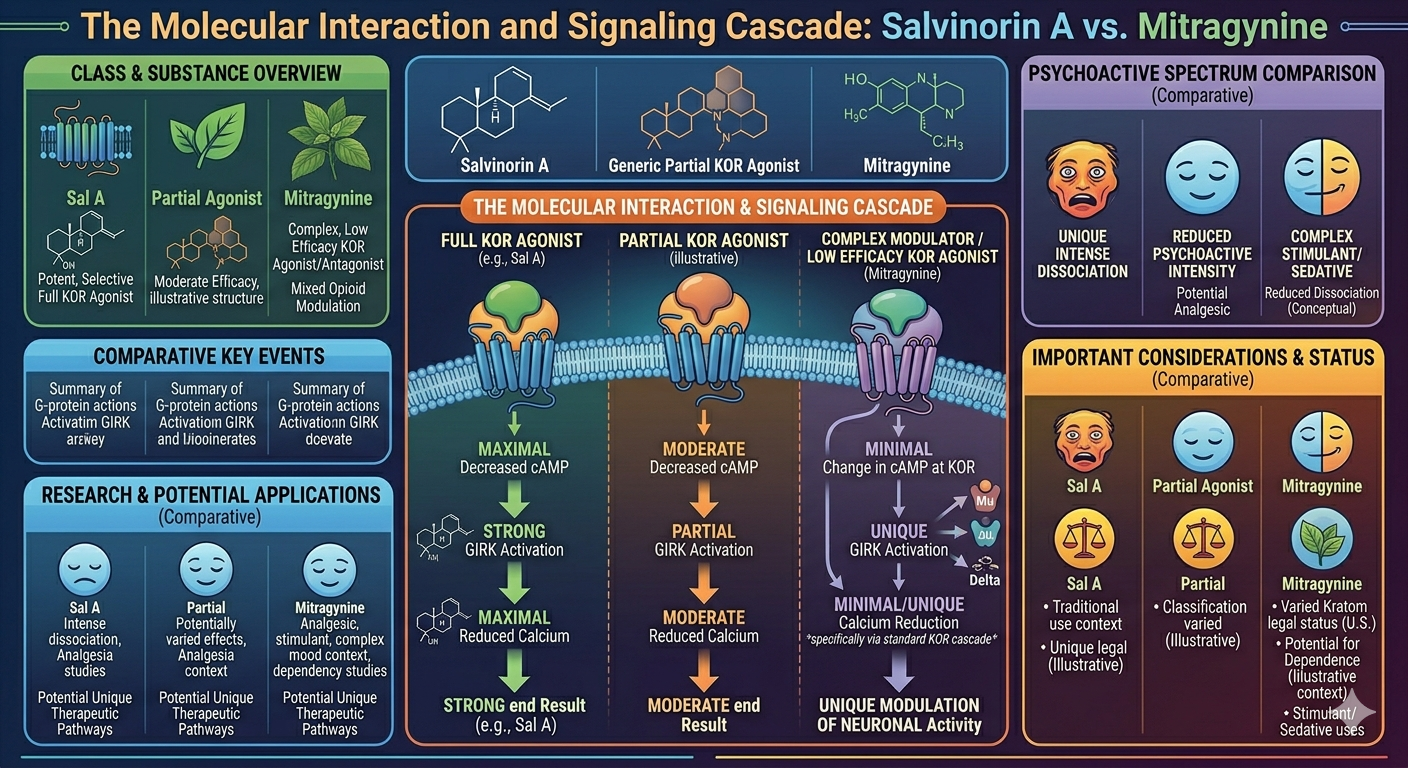
So now, let’s talk a bit about the opioidergic system. This part of the nervous system has various types of opioid receptors that interact with opioidergic molecules. Morphine is a famous opioidergic molecule that can cause addiction. It is a total mu-opioid agonist that interacts powerfully with the opioidergic system.
Kratom is a partial mu-opioid receptor agonist. It interacts less powerfully than morphine at the mu-opioid receptors.
But what do the mu-opioid receptors do?
The mu-opioid receptors manage the body’s experience of pain. Sometimes, pain is ongoing and excruciating. Pain may seem to begin in the physical body and slowly erode into a person’s mood. Or pain may start with an emotional challenge that stresses the physical body. In either case, a person with chronic pain who takes morphine to kill pain will experience, not just pain control, but also a feeling of “floating” or euphoria. Indeed, people who have been in extreme pain for days, weeks, months, or years, experience quite a “lift” (to use our colloquial terms to describe the mu-opioid experience) when their pain stops as a result of morphine.
Morphine is a total mu-opioid receptor agonist so it produces a powerful pain-killing response that is often experienced like being outside of the body or like floating around it. But kratom contains a substance known as mitragynine that interacts not just with mu-opioid receptors, but also kappa-opioid, and delta-opioid receptors. Mitragynine also acts as a modulating agent with the dopaminergic, serotonergic, and adrenergic receptors as well. But as a partial mu-opioid receptor agonist, mitragynine does not produce that same sensation of euphoria that’s so addictive in those who are taking morphine for pain relief.
So we could say that the mu-opioid receptors help us release consciousness from the body so that we can pay attention to something other than just the pain that the body is feeling. This includes, not just physical pain, but also emotional pain. Indeed, emotions are felt as physical pain or physical orientations which is why we have so many idiomatic phrases to talk about emotions and feelings. Below are some examples:
- Heart-broken (sadness / grief)
- Gut wrenching (fear)
- Bent over backward (feeling of being taken advantage-of)
- On the edge of one’s seat (suspense)
- Jaw-dropping (surprise / shock)
- On top of the world (euphoria / joy)
- Etc.

Click here to do a free trial of EMDR to Release Trauma.
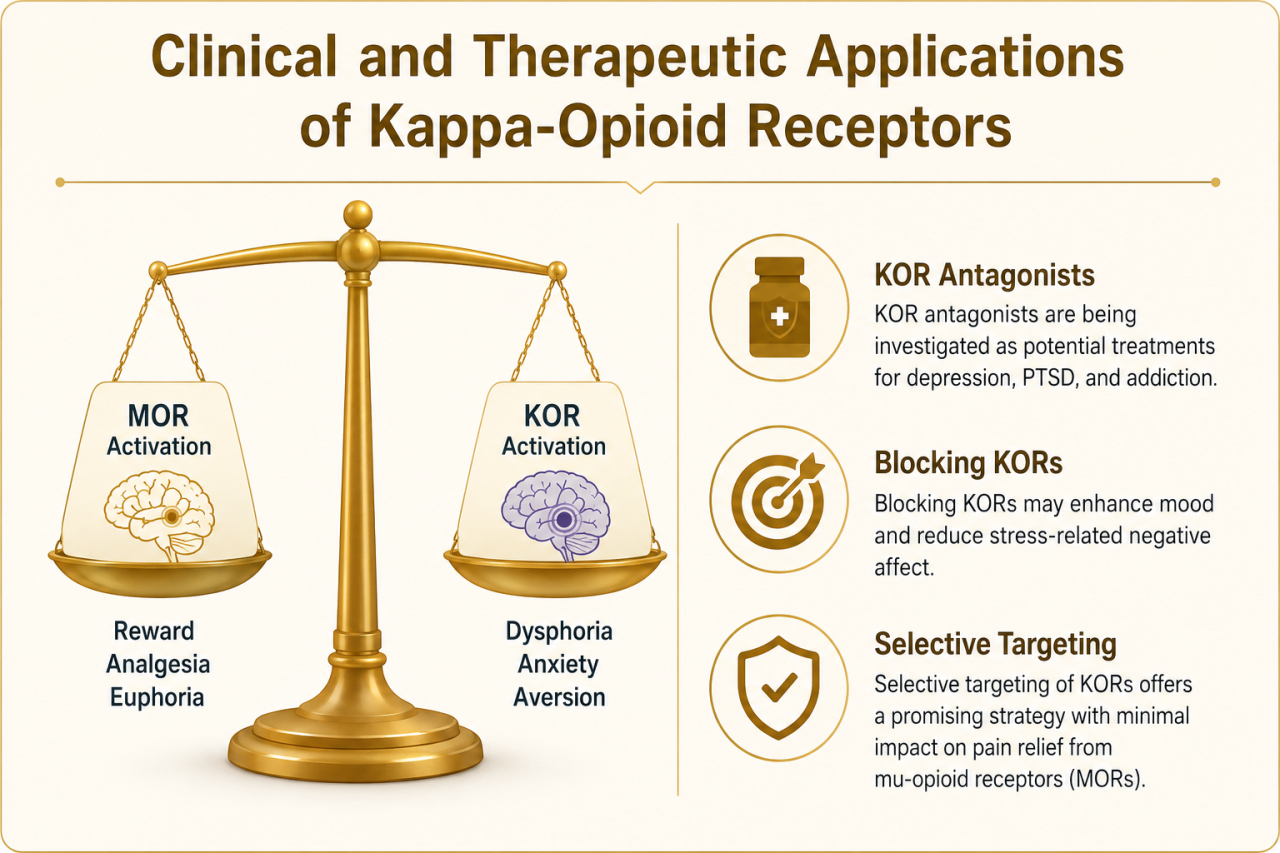
A total mu-opioid receptor agonist like morphine helps us become less focused and less aware of physical and emotional pain, but with the side-effect of not feeling totally in the body. Kratom is not a full mu-opioid receptor agonist. It is a partial mu-opioid receptor agonist, so it does not detach people completely from their bodies despite having a very powerful pain-killing, mood-lifting effect.Kratom is also a partial kappa-opioid receptor agonist. One of the most famous and most powerful total kappa-opioid receptor agonists is Salvia divinorum, an herb that produces psychedelic effect in large doses, but that can also be used to heal severe gut issues or diseases like Multiple Sclerosis / MS. Kappa-opioid receptors play a role in pain production and agonists can provide pain-relief, albeit without any sense of euphoria. In fact, the kappa-opioid receptors, when fully activated by something like Salvinorin A in the plant Salvia divinorum, will produce a psychedelic trip involving a total release from consensus reality into a reality that has been described by some as The Land of the Dead.
Like mu-opioid receptors that can produce a sense of euphoria and a disconnection from our emotional and physical pain when they are fully activated, kappa-opioid receptors, when fully activated, can catapult us into a completely different reality altogether – a reality that often involves powerful feelings of homesickness.
The kappa-opioid receptors don’t provoke an addictive response. Rather, they produce feelings of dysphoria which is an existentially awkward feeling of being utterly misplaced. Many people mistake this feeling for dysphoria as “homesickness” that seems out of place or out of sync situationally. Nonetheless, different triggers can bring on waves of dysphoria. For example, many women (Lydi was among them) experienced Dysphoric Milk Ejection Reflex (D-MER) whenever her milk would let down when she was breastfeeding baby Maya. Indeed, as a mother readies herself to breast-feed, she may feel a sudden burst of impending doom or rage that feels completely out-of-place in the context of breast feeding. The feeling, as it lingers, may feel a bit like being powerfully misplaced or lost in the world – like being kidnapped and held captive in a deep, dark cave with lots of creepy crawlies. Though D-MER is relatively common among young mothers, few women know about it and the ones who experience it, likely often suffer through it in silence, believing that there is, perhaps, something wrong with them. Some young women may even have postpartum psychosis as a result of D-MER and the role of kappa-opioid receptors in the body.
One of the feelings that people often experience at the beginning of a Salvia divinorum trip is the feeling of being forcibly “pulled backward” or sometimes sideways. This feeling is followed by the content of the trip into this other plane of reality. We might presume that strong kappa-opioid receptor activation produces a full-trip that actually involves “going to a different reality” that’s completely separate from this reality. Yet, Salvia divinorum also does not paralyze the body so often, people will “act out” what’s happening in the other reality – in the Land of th Dead.
Salvia divinorum trips have something to teach us about this part of our human bodies. Our personal experience with this plant medicine is that trips are meaningful. The content is there to teach or guide us through something or it deals with past trauma that needs to be integrated. It can take years to dissect the meaning of a Salvia divinorum trip and while it seems to be completely divorced from consensus reality, in fact, this plant medicine speaks to us through the kappa receptors, about something that we desperately need to understand.
Kappa-opioid receptors and their interaction with endogenous or exogenous substances, in other words, can provoke subtle experiences of psychosis wherein the felt reality is challenged by feelings that are totally out-of-sync and out-of-place with the facts of what’s actually happening. You may be sitting in the safest, most comfortable place in your home, doing something you thoroughly enjoy and a feeling of being terribly homesick with a gut-wrenching (angry or awkward), I-don’t-know-if-I’ll-ever-get-to-go-home-again feeling. This feeling might last for a few minutes or a few hours. Dysphoria can impact everything from breastfeeding to what we wear each day. Some people feel gender dysphoria that challenges the feeling of being “at home in the body” as a human with a particular gender. Dysphoria may, at times, involve deep feelings of being lost, embarrassed, or angry, but always, there is a powerful sense of disconnection involved that’s very uncomfortable.
Click here to learn more about the DreamLight.app, a guided meditation and brain-entrainment tool for natural trauma-release.
If you’ve ever experienced dysphoria and taken note of it as a feeling that was very uncomfortable and perhaps even too embarrassing or too confusing to talk about openly, you’re experiencing the feeling of psychosis without the complete disruption in your connection to consensus reality.Interestingly, the biology of breastfeeding provides a logical structure with which to consider how kappa-opioid receptors hook into the other parts of the nervous system. Prolactin is the hormone that causes milk to “let-down” in women when they’re breast-feeding. Milk let-down is situational and it can happen post-partum to women in response to simply hearing a baby cry. This fun fact suggests that humans are connected to each other in some very interesting ways beyond just our reflex to yawn in response to others in a room who are also yawning, but that’s another matter entirely. The big take-away here that I’d like to highlight is that when kappa-opioid receptors are activated, prolactin levels increase in blood circulation.
In turn, prolactin and dopamine share an inversely self-regulating relationship. When dopamine levels are high, prolactin levels drop. When prolactin levels are high, the hypothalamus produces more dopamine so as to balance things out. When kappa-opioid receptors are activated, prolactin levels go higher than they normally would. Dopamine production increases naturally in an effort to keep prolactin levels balanced at the same time.
When a kappa-opioid agonist like the mitragynine in kratom or the salvinorin A in Salvia divinorum, binds to receptors on the dopamine-producing neurons in the hypothalamus, this relaxes the usual braking mechanism that keeps prolactin levels within certain boundaries. Kappa-opioid receptor agonists like mitragynine and salvinorin A increase prolactin levels via their impact on dopamine.
Psychosis and psychotic states are strongly correlated with dopamine imbalances as well as high prolactin levels (hyperprolactinemia). Unfortunately, many of the antipsychotic drugs that are prescribed today actually cause hyperprolactinemia by blocking the dopamine receptors. Patients who have never taken antipsychotic drugs who experience their first psychotic break are often hyperprolactinemic. But while prolactin definitely seems to play a role in psychosis, we definitely need to think of dopamine and prolactin as two sides of the same coin in order to understand what’s going on here.
The release of too much dopamine can lead to a misinterpretation of everyday situations (an experience of reality that differs substantially from consensus reality), a situation that can happen, for example, when a person takes a drug like methamphetamine. In trauma-informed therapy, an excess release of dopamine can lead to “flooding” or a surge of trauma-based memory content from the right hemisphere of the brain to the left hemisphere of the brain. The right brain might be regarded as “body-oriented” of “felt-sense” content. The left brain deals with logical, narrative content. If, as a result of a family culture that does not deal with feelings, or as a result of a toxic school environment or any type of abuse, the psychotic patient built a firewall against right brain material so as to protect him or herself from the negative feelings that the body needed to integrate, psychosis can and does develop. “Flooding” is a word that’s been given to a state involving either pain (such as a migraine) or psychosis wherein the right brain forces through the firewall to talk to the left-brain about a stress or trauma that needs to be dealt with now. A lack of dopamine can lead to poor motivation, addictive behaviors, depression, and an inability to make positive, healthy decisions for oneself. The general conclusion about dopamine and psychosis online right now is that “too much dopamine causes psychosis” but this isn’t accurate. Dopamine is made and stored in neurons. It’s hard to “make too much dopamine” because other neurotransmitters like noradrenaline and adrenaline are made from dopamine as a precursor. Also, just because dopamine is made and being stored in neurons doesn’t mean that it will be “released” into the synaptic gap to transmit a nerve impulse. So we can’t just say that dopamine by itself is the only offending agent in psychotic states.
Rather, we have to look at dopamine and prolactin together as though they were two aspects of a lens through which we view the world. Let’s say that dopamine is the horizontal axis and prolactin is the vertical axis. Normally, these two substances balance each other to ensure that we see reality through a lens that has been carefully calibrated to what consensus reality has dictated to us. Dopamine is a left-brain-oriented neurohormone. It deals with rules and logic as well as narrative. As the horizontal axis, it makes sure that our lens does not expand beyond what we’ve been taught to believe horizontally.
In contrast, prolactin deals with the vertical axis. Prolactin is a peptide hormone that is stimulated by thyrotropin releasing hormone / TRH. TRH represents the right-hemisphere of the brain and our “felt sense”. It is TRH that ensures that we dream in color and that our dreams are vivid and interesting. Without TRH, our creativity suffers and we lack a sense of direction and intuition. Prolactin, of course, is a hormone that sits at an intersection not just with dopamine, but also with oxytocin. Oxytocin and prolactin work together to promote social and emotional bonding. In women, this prolactin-oxytocin relationship is easy to observe. The baby cries and the mother’s milk let’s down in response (that’s really amazing, right?), but the prolactin-oxytocin relationship also exists in men. Prolactin acts a bit like a go-between with both dopamine, the part of us that’s sensitive to the rules that govern our daily lives, and oxytocin, another peptide hormone that deals specifically with love.
Some people like to slather dopamine-related thinking all over oxytocin-ideas and diminish love down to a hormonal reflex. I’m going to go a different direction though and say that love is not always warm and fuzzy. This “love-stuff” that oxytocin manages deals instead with a specific type of connection that we have to some people in our lives, like it or not.
Prolactin is the go-between that mediates on behalf of these love-connections (which are often ugly and not very warm, in fact) with dopamine and the logical-left brain. Normally, prolactin seeks to keep its relationship with dopamine very balanced. Dopamine, after all, is the horizontal axis of reality. It has a lot of power. But our love-connections challenge us in a particular way that can cause our reality to shift in order to maintain and heal those connections. We might be unwilling to walk a tight-rope for ourselves, but without questioning it, we’d walk a wire between two skyscrapers for someone we love. This isn’t logical and there’s really no way to make sense of love. Yet, we can’t deny that love exists and that it causes us to expand our horizons.
When dopamine and prolactin both shift to higher levels of release in the body, our reality is expanded or it may shift entirely. Now, let’s consider the kappa-opioid receptor agonists again as exogenous agents that bind to and activate the receptors. Salvinorin A from Salvia divinorum is a total kappa-opioid receptor agonist while mitragyinine from Mitragyna speciosa / kratom is a partial kappa-opioid agonist.
Kappa-opioid receptor agonists like salvinorin A and mitragyinine can expand both the horizontal and vertical axis of that lens through which we look out into “reality”. And salvinorin A can also “shift” that lens to a totally different reality that the body and the mind both experience simultaneously as fully immersive. Oxytocin is still a part of the equation though as a neuropeptide that helps us experience and navigate the complexities of love and the connection that we naturally have to other living beings.
So we’ve established that kappa-opioid receptors can elicit a reality shift by expanding the boundaries that are normally imposed on us by prolactin and dopamine. If we think of the kappa-opioid receptors as functional units that can either open or close down our lens of reality, a funnel that either admits a limited or a more expansive view of what actually exists, this can help us better understand the kappa-opioid receptor function in terms of our anecdotal, lived experience. Some people have a Reality Lens that’s naturally open and expansive while others have a Reality Lens with a very limited view. All of us begin our lives with no words and only feelings, including that amazing connection, via oxytocin and prolactin and the sound of our wordless voice, to get mommy to feed us and take care of us and to know what we need.
It doesn’t matter whether you have an open Reality Lens or a lens that’s relatively closed. No one has a clear view of the entirety of Reality. But kappa-opioid receptors open and expand reality via their impact on dopamine and prolactin, in part, through its ability to produce experiences that make us see ourselves through alternative perspectives. Some of these perspectives come from loved ones and that oxytocin-connection.
Salvia divinorum trips involve a total dissociation from consensus reality and they often include dissociative states in which a person’s consciousness embodies inanimate objects. You might become the flowers on the wallpaper and look back at yourself in a specific situation that’s meaningful or possibly painful in order to master the situation. We could say that humans possess this ability to empathize and connect to other people as well as to animals, plants, and inanimate objects. We can see ourselves as though we were the fly on the wall if we want to and we use our kappa-opioid receptors to do this sort of thing.
Without a full-trip that involves an actual break from reality like what happens when you take a properly high dose of Salvia divinorum, you won’t have insight into dysphoric states that are produced by a kappa-opioid agonist like kratom. You won’t know the story of your dysphoria without the psychedelic journey, but that’s okay. Some people want to know the underlying cause and they want to work with this material directly through journeys into other planes of reality. Other people are terrified of this sort of thing. Nonetheless, for those who are not yet willing to work with Salvia divinorum, there is kratom, a plant medicine that partially activates the kappa-opioid receptors to bring up states of dysphoria that often pertain to our relationships with other people. Kratom has a broad spectrum of action on the nervous system. It activates not only the kappa-opioid receptors, but also the mu- and delta-opioid receptors. It modulates dopamine as well as serotonin and adrenaline levels to center a person’s emotional state. Scientists have yet to demonstrate exactly how kratom works to treat psychosis naturally, but the modulation of dopamine and prolactin via kappa-opioid receptor agonism might function to help those who are experiencing an expansion of their reality (what we call psychosis) to be able to put words to their experience using modulated dopamine levels in order to define it rather than acting it out. This is my theory as someone who has worked with psychotic patients using kratom. Using kratom, some “psychotic” patients are able to experience this expanded version of reality (as in A Beautiful Mind) while maintaining the deep connections that they have with loved ones in the reality that we’ve all agreed on tentatively so as to be here on earth together.